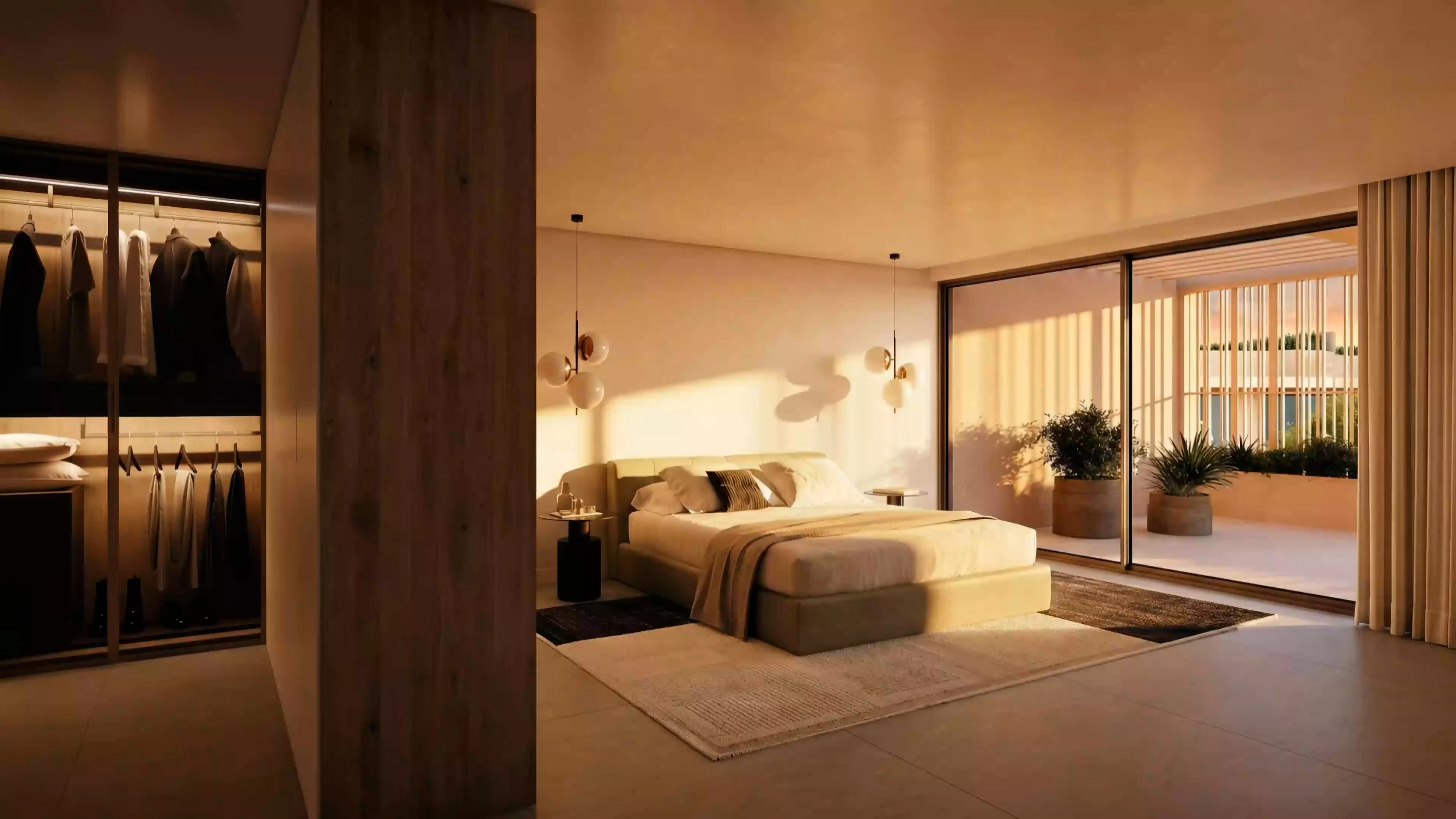
Static camera shots with selected animated elements such as moving vegetation, curtains, water, light shifts or time-lapse details.
A cinemagraph keeps the camera completely locked and lets one or two things move: vegetation catching a breeze, water rippling, light sliding across a facade over a compressed time-lapse. Most of the frame reads as a still photograph. The one small, looping motion is what holds attention, which is exactly why it works so well as a website hero or a social post that needs to loop cleanly without a visible jump cut.
It sits in an odd, useful middle ground between a still image and a full film. A still is static; a film asks for real attention and a soundtrack; a cinemagraph asks for almost nothing and still manages to feel alive on a page. For architectural visualization specifically, that makes it a natural fit for hero banners, email headers and social feeds where autoplay video is either unwelcome or technically awkward.
Because it's derived from the exact same lit, textured 3D scene used for a project's stills, a cinemagraph doesn't read as a separate piece of media bolted on afterward. The material response, the light and the overall mood match everything else produced from that same file, so it reinforces a project's visual identity instead of introducing a new one.
The animated element itself is chosen deliberately rather than defaulted to. Moving water suits a coastal or waterfront setting; drifting curtains or shifting interior light suits an occupied interior scene; a slow cloud or light time-lapse suits an exterior hero shot where the goal is atmosphere rather than motion for its own sake.
It's a considerably lighter production lift than a full film, both in cost and turnaround, which makes it a sensible middle option when a project wants some motion in its marketing materials without committing to a full walkthrough edit and sound design.
If a project needs a small amount of movement to make a page or a feed post feel less static, without the scope of a complete film, this is usually the right call. See the related work below for how it's been used.